Photos - Fotos: The start of the Monsoon season - The Boston Globe - The Big Picture - 32 images

Posted by Ricardo Marcenaro | Posted in | Posted on 18:25

0


The start of the Monsoon season


Monsoon season in southern Asia has begun, and in India the rains arrived ahead of schedule, easing drought concerns. Monsoon rains can be disruptive and even deadly, but crucial for the farmers whose crops feed millions of people. Though concerns for flooding are prevalent, the arrival of the rains brings colorful celebrations and relief from the heat every year. -Leanne Burden Seidel (32 photos total)

An Indian buffalo herder holding a traditional handmade umbrella stands in a field to keep watch of his buffaloes as monsoon clouds hover above in Bhubaneswar, India, on June 13, 2013. (Biswaranjan Rout/Associated Press)

2
The Kumari, considered a living goddess, attends festivities on the last day of the Rato Machindranath chariot festival, also known as Bhoto Jatra, in Jwalakhel, on the outskirts of Kathmandu on June 7, 2013. The event, celebrated every year to herald good monsoon rains for increased rice harvest, prosperity and goodluck, is one of the main festivals observed by both the Buddhist and Hindu communities of Kathmandu. (Prakash Mathema/AFP/Getty Images) #

3
Indian women protect themselves standing under tree during rain in Hyderabad, India, on June 11, 2013. Monsoon rains, that lash India from June to September, are considered crucial for farmers whose crops feed millions of people. (Mahesh Kumar A./Associated Press) #

4
A farmer removes dried grass from his rice field against on the outskirts of the western Indian city of Ahmedabad June 13, 2013. The annual monsoon rains are crucial for the 55 percent of farmland without irrigation in India, one of the world's biggest producers and consumers of foodstuffs. (Amit Dave/Reuters) #

5
The dark rain clouds appear off Dehiwala in the suburbs of Colombo, Sri Lanka, on June 8, 2013. Strong gale force winds from early this morning due to the south-west monsoon resulted in several fisher craft being reported missing.(M.A Pushpa Kumara/EPA)#

6
Dark clouds are seen in the sky over high-rise buildings, heralding heavy rainfalls in the eastern Indian city of Calcutta, India, on June 7, 2013. The summer monsoon season in India usually begins in the months of June and July and lasts until October. (Piyal Adhikary/EPA)#

7
Indian fishermen push a fishing boat to anchor it near the Arabic Sea shore at the Chowk Dongri village in Thane, India, on June 8, 2013. The local fishermen stop fishing between 10 June and 15 August during the monsoon period due to rough seas, uncertain wind conditions and continuous rain which also can cause damage to the boats. (Divyakant Solanki/EPA) #

8
A man holds an umbrella as he sits on a bench during monsoon rains in Mumbai, India, on June 12, 2013. (Rafiq Laqbool/Associated Press)#

9
An egret feeds its baby on a tree along the River Brahmaputra in Gauhati, India, on June 3, 2013. The arrival of egrets usually indicates the beginning of the monsoon season in this region. (Anupam Nath/Associated Press)#

10
A woman carries her child through a heavy rain shower in the northern Indian city of Chandigarh on June 11, 2013. India's monsoon rains recorded higher than average levels in the first week of the four-month rainy season, weather office sources said, reflecting a timely onset and progress so far over southern states. (Ajay Verma/Reuters)#

11
An Indian buffalo herder returns with water buffaloes on a dry river bed in Allahabad on June 9, 2013. India's 235 million farmers still rely on the erratic rains to soak around 60 percent of the country's farmland -- despite calls for the government to improve irrigation and water-harvesting methods to ensure more stable crop output. (Sanjay Kanojia/AFP/Getty Images)#

12
People enjoy high tide waves during monsoon rains on the Arabian Sea coast in Mumbai, India, on June 12, 2013. (Rajanish Kakade/Associated Press) #

13
A man holds a cloth during a marriage ceremony between a pair of donkeys in Mumbai June 5, 2013. Dozens of farmers from the drought-hit district of Solapur attended this marriage ceremony in protest against what they say was lack of assistance from the state government during the drought. According to a local Hindu belief, the marriage of donkeys speeds up the arrival of monsoon rains. (Danish Siddiqui/Reuters)#

14
Sri Lanka Navy personnel attempt unsuccessfully to reach marooned fishing boats off the coasts of Dehiwala in the suburbs of Colombo, Sri Lanka, on June 8, 2013. Strong gale force winds from early this morning due to the south-west monsoon resulted in several fisher craft being reported missing. Several of them were rescued while four fishermen were reported killed and 17 others have been reported missing.(M.A Pushpa Kumara/EPA)#

15
Family members of a missing fisherman cry in Dehiwala, Sri Lanka, on June 8, 2013. Heavy wind and rains caused by the southwestern monsoon killed five people and left 17 fishermen missing along Sri Lanka's coast Saturday, an official said. (Eranga Jayawardena/Associated Press)#

16
Volunteers learn how to install sand bags and panels at homes in case of a flash flood during the rain season in Seoul, South Korea, on June 13, 2013. Forecasters predict the monsoon season will begin around 17 June, starting from the country's central region. (Yonhapnews/EPA)#

17
A member of the Bathini Goud family administers 'fish medicine' to a patient at the Nampally Exhibition Grounds in Hyderabad on June 9, 2013. The medicine, which has been offered by the family of the southern Indian city to patients for the last 162 years as a cure for asthma and other breathing disorders, is placed in the mouth of a live murrel fish and then slipped into the mouth of the patient. The medicine is administered on the auspicious day of 'Mrigasira Karti' which falls in June with the onset of the annual monsoon. The treatment, which is based on a secret herb formula, draws thousands of people from all over the country. (Noah Seelam/AFP/Getty Images) #

18
A man sleeps on a cot in a flooded lane during monsoon rains in Mumbai, India, on June 10, 2013. Heavy rains disrupted rail and road traffic in India's commercial capital affecting normal life.(Rafiq Maqbool/Associated Press)#

19
A Nepalese farmer works in a field at Khokana on the outskirts of Katmandu, on June 6, 2013. Farmers are busy ploughing fields for planting rice in preparation for the monsoon season. (Niranjan Shrestha/Associated Press) #

20
A photographer holds an umbrella to shield himself from the rain on a beach in Mumbai June 13, 2013. Annual monsoon rains have covered half of India two days ahead of the usual date, easing concern over southwestern regions parched by drought. (Danish Siddiqui/Reuters)#

21
Nepalese devotees carry traditional torches during festivities on the last day of the Rato Machindranath chariot festival, also known as Bhoto Jatra, in Bungamati on June 7, 2013. The event, celebrated every year to herald good monsoon rains for increased rice harvest, prosperity and goodluck, is one of the main festivals observed by both the Buddhist and Hindu communities of Kathmandu.(Prakash Mathema/AFP/Getty Images) #

22
Boys play at a sea wall as waves crash over it during a monsoon rain shower in Mumbai, June 13, 2013. (Vivek Prakash/Reuters)#

23
Young Indian Muslim boys mop the floor of a mosque which got wet during rains in New Delhi, India, on June 14, 2013. The monsoon rains which usually hit India from June to September are crucial for farmers whose crops feed hundreds of millions of people. (Altaf Qadri/Associated Press)#

24
A fish vendor carries his basket on his head covered with plastic as he walks through a street during monsoon rains in Mumbai, India, on June 9, 2013. The Southwest monsoon, arrived in the city Saturday, three days ahead of schedule, according to the meteorological department. (Rafiq Maqbool/Associated Press)#

25
Excavators clear debris as rescue workers look for trapped people after a residential building collapsed, killing at least seven people in Mumbai on June 10, 2013. Four diggers and a crowd of people were gathered around a high mound of rubble -- the remains of half of the four-story building that caved in on the second day of heavy monsoon rains in the city. (Punit ParanjpeAFP/Getty Images)#

26
Rescue workers take out a body from the rubble after a residential building collapsed in heavy monsoon rains in Mumbai, India, on June 11, 2013. (Rajanish Kakade/Associated Press) #

27
A boy plays as a car drives through a flooded street during monsoon rains in Mumbai, India on June 10, 2013. Heavy rains disrupted rail and road traffic in India's commercial capital. (Rafiq Maqbool/Associated Press)#

28
Indian people shelter under umbrellas as they wait for a bus during heavy rain in Mumbai, India on June 8, 2013. Monsoon rains lash India from June to September. (Rajanish Kakade/Associated Press) #

29
An Indian farmer ploughs a field as part of preparations for paddy crop planting on the outskirts of Hyderabad on June 11, 2013. India's monsoon rains are the main source of irrigation for the nation's 235 million farmers who depend on the timing of the monsoon in order to decide which crops to grow.The farm sector accounts for about 15 percent of a nearly USD 2-trillion economy, Asia's third-biggest.( Noah Seelam/AFP/Getty Images)#

30
An Indian man looks at damage to a road during heavy monsoon rains near Govindghat town in the Indian state of Uttrakhand on June 17, 2013. Heavy rains lashed parts of north India Monday, resulting in the deaths of at least 18 people, as the annual monsoon covered the country nearly two weeks ahead of schedule. (AFP/Getty Images)#

31
Indian people walk along the sea front during rain showers in Mumbai on June 14, 2013. The weather department has forecast India will receive normal rains this year, raising prospects of a stronger performance by Asia's third-largest economy. (Punit Paranjpe/AFP/Getty Images) #

32
Fast moving water flows over a Hindu statue during a heavy monsoon rain in Rishikesh town in the Indian state of Uttrakhand on June 17, 2013. More than a dozen people lost their lives due to record downpours in Uttarakhand state, situated in the foothills of the Himalayas. (AFP/Getty Images)#


Photos - Fotos: The start of the Monsoon season - The Boston Globe - The Big Picture - 32 images


Ricardo M Marcenaro - Facebook

Blogs in operation of The Solitary Dog:

Solitary Dog Sculptor:
http://byricardomarcenaro.blogspot.com

Solitary Dog Sculptor I:
http://byricardomarcenaroi.blogspot.com

Para:
comunicarse conmigo,
enviar materiales para publicar,
propuestas comerciales:
marcenaroescultor@gmail.com

For:
contact me,
submit materials for publication,
commercial proposals:
marcenaroescultor@gmail.com


My blogs are an open house to all cultures, religions and countries. Be a follower if you like it, with this action you are building a new culture of tolerance, open mind and heart for peace, love and human respect.

Thanks :)

Mis blogs son una casa abierta a todas las culturas, religiones y países. Se un seguidor si quieres, con esta acción usted está construyendo una nueva cultura de la tolerancia, la mente y el corazón abiertos para la paz, el amor y el respeto humano.

Gracias :)


Poesia: Catulo - Poemas a Lesbia – Carmen LI - LXXXV - CIX - LXXV - XCII - LXX - LVIII - XLIII - Links

Posted by Ricardo Marcenaro | Posted in | Posted on 18:03

0


LI

Semejante aun dios se me aparece aquel,
superior a los dioses, si es lícito,
que sentado frente a ti, sin cesar,
te observa y escucha
reír dulcemente, lo que a mí, desgraciado,
todos los sentidos me arrebata:
Lesbia, en cuanto te veo,
mi voz se apaga,
la lengua se torna torpe, y bajo mis miembros
comienza a manar una llama;
me zumban los oídos y una noche
doble cubre mis ojos.
El ocio, Catulo, te es pernicioso;
en el ocio te exaltas e impacientas.
El ocio ya perdió antes muchos reyes
y ciudades felices.


LXXXV
Odio y amo. Por qué lo hago, me preguntas tal vez.
No sé, pero siento cómo se hace y me torturo


CIX

Me prometes, vida mía, que este amor será feliz
y perpetuo entre nosotros.
Grandes dioses, haced que pueda prometer con verdad
y que lo diga sinceramente y de corazón,
para que toda nuestra vida podamos mantener
ese sagrado lazo de cariño eterno


LXXV

A tal extremo ha llegado mi corazón, Lesbia mía, por tu culpa,
y tanto se ha perdido por su misma fidelidad,
que ahora ya no puedo tenerte aprecio, aunque te vuelvas la mejor de todas,
ni dejar de quererte por mucho que hagas.


XCII

Lesbia dice pestes de mí todo el tiempo y no para.
¡Que me muera si Lesbia no me quiere!
¿Cómo lo sé? Porque me pasa lo mismo: la maldigo a todas horas,
pero ¡que me muera si no la quiero!


LXX

Mi amada asegura que con nadie quiere casarse
Excepto conmigo, a no ser que el mismo Júpiter se lo pida.
Eso dice, pero lo que una mujer dice a su deseoso amante
En el viento y en el agua rápida conviene escribir


LVIII

Nuestra Lesbia, Celio, aquella Lesbia,
aquella Lesbia a quien Catulo amó,
más que a sí mismo amó, más que a todo lo suyo amó,
ahora en esquinas y en callejuelas
se las pela a los magnánimos nietos de Remo.


XLIII

Hola, muchacha sin nariz pequeña,
Sin bello pie, ni negros ojos,
Sin dedos largos, y de rostro sudoroso,
Con lengua apenas elegante,
Amiga del rumboso Formiano,
¿acaso se dice en provincias que eres bella?
¿contigo comparan a nuestra Lesbia?
¡Tiempo ignorante y corrompido!


Poesia: Catulo - Poemas a Lesbia – Carmen LI - LXXXV - CIX - LXXV - XCII - LXX - LVIII - XLIII - Links


Ricardo M Marcenaro - Facebook

Blogs in operation of The Solitary Dog:

Solitary Dog Sculptor:
http://byricardomarcenaro.blogspot.com

Solitary Dog Sculptor I:
http://byricardomarcenaroi.blogspot.com

Para:
comunicarse conmigo,
enviar materiales para publicar,
propuestas comerciales:
marcenaroescultor@gmail.com

For:
contact me,
submit materials for publication,
commercial proposals:
marcenaroescultor@gmail.com


My blogs are an open house to all cultures, religions and countries. Be a follower if you like it, with this action you are building a new culture of tolerance, open mind and heart for peace, love and human respect.

Thanks :)

Mis blogs son una casa abierta a todas las culturas, religiones y países. Se un seguidor si quieres, con esta acción usted está construyendo una nueva cultura de la tolerancia, la mente y el corazón abiertos para la paz, el amor y el respeto humano.

Gracias :)


NASA: USA - Rare Clear View of Alaska - 06.07.13

Posted by Ricardo Marcenaro | Posted in | Posted on 17:46

0



Rare Clear View of Alaska
acquired June 17, 2013 download large image (10 MB, JPEG, 6400x8400)
acquired June 17, 2013 download GeoTIFF file (87 MB, TIFF)
acquired June 17, 2013 download Google Earth file (KMZ)
On most days, relentless rivers of clouds wash over Alaska, obscuring most of the state’s 6,640 miles (10,690 kilometers) of coastline and 586,000 square miles (1,518,000 square kilometers) of land. The south coast of Alaska even has the dubious distinction of being the cloudiest region of the United States, with some locations averaging more than 340 cloudy days per year.
That was certainly not the case on June 17, 2013, the date that the Moderate Resolution Imaging Spectroradiometer (MODIS) on NASA’s Terra satellite acquired this rare, nearly cloud-free view of the state. The absence of clouds exposed a striking tapestry of water, ice, land, forests, and even wildfires.
Snow-covered mountains such as the Alaska Range and Chugach Mountains were visible in southern Alaska, while the arc of mountains that make up the Brooks Range dominated the northern part of the state. The Yukon River—the longest in Alaska and the third longest in the United States—wound its way through the green boreal forests that inhabit the interior of the state. Plumes of sediment and glacial flour poured into the Gulf of Alaska from the Copper River. And Iliamna Lake, the largest in Alaska, was ice free.
The same ridge of high pressure that cleared Alaska’s skies also brought stifling temperatures to many areas accustomed to chilly June days. Talkeetna, a town about 100 miles north of Anchorage, saw temperatures reach 96°F (36°C) on June 17. Other towns in southern Alaska set all-time record highs, including Cordova, Valez, and Seward. The high temperatures also helped fuel wildfires and hastened the breakup of sea ice in the Chukchi Sea.
NASA image courtesy Jeff Schmaltz, LANCE MODIS Rapid Response Team at NASA GSFC. Caption by Adam Voiland.
Instrument: 
Terra - MODIS


NASA: USA - Rare Clear View of Alaska - 06.07.13


Ricardo M Marcenaro - Facebook

Blogs in operation of The Solitary Dog:

Solitary Dog Sculptor:
http://byricardomarcenaro.blogspot.com

Solitary Dog Sculptor I:
http://byricardomarcenaroi.blogspot.com

Para:
comunicarse conmigo,
enviar materiales para publicar,
propuestas comerciales:
marcenaroescultor@gmail.com

For:
contact me,
submit materials for publication,
commercial proposals:
marcenaroescultor@gmail.com


My blogs are an open house to all cultures, religions and countries. Be a follower if you like it, with this action you are building a new culture of tolerance, open mind and heart for peace, love and human respect.

Thanks :)

Mis blogs son una casa abierta a todas las culturas, religiones y países. Se un seguidor si quieres, con esta acción usted está construyendo una nueva cultura de la tolerancia, la mente y el corazón abiertos para la paz, el amor y el respeto humano.

Gracias :)


Sculpture - Escultura: Auguste Rodin - Part 3 - Links

Posted by Ricardo Marcenaro | Posted in | Posted on 18:12

0


Auguste Rodin 
Las puertas del infierno. 
Museo Rodin - Zürich - Kunsthaus - Rodin's Höllentor


 Auguste Rodin 
A famous fragment The Walking Man

 
Auguste Rodin
 The walkimg man

 
 The Fallen Caryatid Carrying her Stone  circa 1880-1, cast 1950
La Cariatide tombÈe portant sa pierre

Bronze
object: 390 x 305 x 310 mm, 28.8 kg
sculpture

Purchased 1950

N05955
In 1880 Rodin was commissioned to make a portal and set of monumental doors for the MusÈe des arts dÈcoratifs in Paris. This work, known as 'The Gates of Hell', included a large number of figures in relief. These inspired several individual works, including this caryatid. An early version of this sculpture was exhibited in 1886. Three years later one critic wrote, 'this supple little creature, not more that eighteen inches high, is regarded by the sculptor and his friends as one of his very best compositions, and many copies of it have been made for the latter in both marble and bronze'. This particular bronze was made in 1950 from a plaster cast.
 (From the display caption August 2004)


Balzac  1892

Bronze
object: 545 x 355 x 232 mm, 14.2 kg
sculpture

Presented in memory of Lady Sadler by Sir Michael Sadler through the Art Fund 1931

N04589

In 1891 Auguste Rodin was commissioned to make a commemorative statue of the famous French novelist HonorÈ de Balzac (1799-1850). With great thoroughness Rodin studied all existing portraits of Balzac, read all the books about him and paid several visits to Touraine, the area where the writer was born, to study local physiognomy. This head is part of a full length study. Rodin said he wished to show the writer ëas if I had lived with him for yearsí, and modelled an image of him ëin his study, breathless, hair in disorder, eyes lost in a dreamí.


Auguste Rodin was born in Paris in 1840 and died in Meudon in 1917.

 (From the display caption August 2004)


Woman on a Column  circa 1900-3
Femme sur une colonne

Copper electrotype
object: 908 x 203 x 152 mm, 3.3 kg
sculpture

Bequeathed by Mrs Rhoda Symons 1952

N06070

This female figure is adapted from one entitled The Sphinx, from Rodinís monumental bronze doors known as The Gates of Hell. Rodin kept a number of fragments of works standing around his studio on the top of classical columns, and such an arrangement may have inspired this work. Despite its rather delicate proportions, the impression here is of a full-size figure taken to an architectural scale. Such subversion of perception anticipates the impact of Alberto Giacomettiís manipulation of scale and space.
 (From the display caption April 2009)

 
The Kiss  1901-4
Le Baiser

Pentelican marble
object: 1822 x 1219 x 1530 mm, 3180 kg
sculpture

Purchased with assistance from the Art Fund and public contributions 1953

N06228
The Tateís The Kiss is one of three full-scale versions made in Rodinís lifetime. Its blend of eroticism and idealism makes it one of the great images of sexual love. However, Rodin considered it overly traditional, calling The Kiss ëa large sculpted knick-knack following the usual formula.í The couple are the adulterous lovers Paolo Malatesta and Francesca da Rimini, who were slain by Francescaís outraged husband. They appear in Danteís Inferno, which describes how their passion grew as they read the story of Lancelot and Guinevere together. The book can just be seen in Paoloís hand.
 (From the display caption August 2004)

 
Auguste Rodin 
The Age of Gold
ca. 1878  
Black chalk and traces of white chalk on gray paper


Sculpture - Escultura: Auguste Rodin - Part 3 - Links


Ricardo M Marcenaro - Facebook

Blogs in operation of The Solitary Dog:

Solitary Dog Sculptor:
http://byricardomarcenaro.blogspot.com

Solitary Dog Sculptor I:
http://byricardomarcenaroi.blogspot.com

Para:
comunicarse conmigo,
enviar materiales para publicar,
propuestas comerciales:
marcenaroescultor@gmail.com

For:
contact me,
submit materials for publication,
commercial proposals:
marcenaroescultor@gmail.com


My blogs are an open house to all cultures, religions and countries. Be a follower if you like it, with this action you are building a new culture of tolerance, open mind and heart for peace, love and human respect.

Thanks :)

Mis blogs son una casa abierta a todas las culturas, religiones y países. Se un seguidor si quieres, con esta acción usted está construyendo una nueva cultura de la tolerancia, la mente y el corazón abiertos para la paz, el amor y el respeto humano.

Gracias :)


Poetry: Karen Alkalay-Gut - Confessions of an Apicorous - C-c-c-c-c-c-c-c - 1957 - Links

Posted by Ricardo Marcenaro | Posted in | Posted on 17:07

0


Confessions of an Apicorous

My brother leads the seder, and we
become as little children
asking, reciting, doing our shtik
in turn around the room.
I stretch out my neck, turning a bit
from the table, wishing even the liver,
matzo balls, all the afikoman
eaten, digested, the Israelites freed
As a child
I’d refuse to read
except for the chant of the goat song.
Not the wicked son
who asks what does all this
mean
to you
But the fifth one
who must get up from table
walk out the door
when Eliyahu comes in,
just for a breath
of fresh air
Go on without me
but consider me there


C-c-c-c-c-c-c-c

“Spit it out Moses,” I tell him impatiently.
“Give me the whole word at once!”
“It isn’t stuttering, you know,”
He says, suddenly clearly.
“Every letter could go, on its own,
Many different ways.”
“I have to be so careful
Not to say something
That those Israelites
Will interpret
In some extreme direction.
“That’s why I needed to get the laws
Etched out for them
In stone.”

Thanks to

Read more:


1957

We were slaves
to Pharaoh in Egypt,
we sang extempore —
each with a different tune
each with a different memory.
Born on the outer edge of war,
I envisioned only Cecil B. DeMille
and the myriads of extras drowned
behind a trick glass wall.
(No. That isn’t true.
Years before,
when we were in our old home
—flimsy and small—
I would fear
that when we opened the door for Elijah,
Hitler and his men would push in,
destroying all, but my consciousness.)
In the new house
with the massive cherry dining set
my father and I bought secondhand
and the flowered gilt dishes
my mother saved all year,
we were our own leaders.
Our guests leaned on their pillows
and admired the oversized turkey
(symbol I see now of America—
freedom and relief)
the tsimmis, the compote,
and all the extra courses
—fish, liver, soup —
they had only dreamed of
even before the war.
And while I focussed
on the Hagada drawings of Moses,
with his strong, Heston chin,
did my father
think of his years in prison?
Did my mother
recall the boat
that took them back
from the Promised Land to Danzig
on the eve Hitler came in?
On this night of nights
we sang together offkey
that once we were slaves
that now we are free

Thanks to


Poetry: Karen Alkalay-Gut - Confessions of an Apicorous - C-c-c-c-c-c-c-c - 1957 - Links


Ricardo M Marcenaro - Facebook

Blogs in operation of The Solitary Dog:

Solitary Dog Sculptor:
http://byricardomarcenaro.blogspot.com

Solitary Dog Sculptor I:
http://byricardomarcenaroi.blogspot.com

Para:
comunicarse conmigo,
enviar materiales para publicar,
propuestas comerciales:
marcenaroescultor@gmail.com

For:
contact me,
submit materials for publication,
commercial proposals:
marcenaroescultor@gmail.com


My blogs are an open house to all cultures, religions and countries. Be a follower if you like it, with this action you are building a new culture of tolerance, open mind and heart for peace, love and human respect.

Thanks :)

Mis blogs son una casa abierta a todas las culturas, religiones y países. Se un seguidor si quieres, con esta acción usted está construyendo una nueva cultura de la tolerancia, la mente y el corazón abiertos para la paz, el amor y el respeto humano.

Gracias :)


Music: Hosokawa- Concerto for Flute and Orchestra - Bio data

Posted by Ricardo Marcenaro | Posted in | Posted on 14:03

1


Toshio Hosokawa


Hosokawa- Concerto for Flute and Orchestra


Toshio Hosokawa (細川 俊夫 Hosokawa Toshio?, born 23 October 1955 in Hiroshima, Japan) is a Japanese composer of contemporary classical music.

Biography

Hosokawa studied with Yun Isang at the Berlin University of the Arts. Since 1998, Hosokawa has served as Composer-in-Residence at the Tokyo Symphony Orchestra. In 2004, Hosokawa became a guest professor at Tokyo College of Music. In 2001, Hosokawa became a member of Akademie der Künste, Berlin.

Invited by Walter Fink, he was the 18th composer featured in the annual Komponistenporträt of the Rheingau Musik Festival in 2008, in chamber music, played by the Arditti Quartet and Mayumi Miyata (Shō), and the oratorio Voiceless Voice in Hiroshima, performed by the WDR Symphony Orchestra and Choir, Cologne conducted by Rupert Huber.[1]
Awards and honors

Hosokawa has received the following awards and honors.

    First Prize in the Composition Competition which marked the 100th Anniversary of the Berliner Philharmoniker (1982)
    Rheingau Musikpreis (1998)
    Duisburger Musikpreis (1998)
    musica viva-Preis der ARD und BMW AG (2001)
    the 39th Suntory Music Award (2007)

Compositions
Opera
Premiere     Title     Description     Libretto and source
19 Apr 1998, Gasteig/ Munich Biennale     Vision of Lear     Opera in 2 acts, 105'     Tadashi Suzuki, after his stage play The Tale of Lear
08 Jul 2004, Théâtre du Jeu de Paume/ Festival d'Aix-en-Provence     Hanjo     Opera in 1 act, 80'     the composer, after the English translation by Donald Keene of the modern Noh play by Yukio Mishima
03 May 2011, La Monnaie, Bruxelles     Matsukaze     Opera in one act, 80'     Hannah Dübgen, after the Noh play Matsukaze by Zeami
Oratorio

    Voiceless Voice in Hiroshima for soloists, narrators, chorus, tape (ad lib.) and orchestra (1989/2001) after Matsuo Bashō, Paul Celan and Genbaku no Ko[2]

Orchestral

    In die Tiefe der Zeit (Into the Depths of Time)
    Ferne Landschaft (1987), recorded 1988, Denon, The Contemporary Music of Japan, COCO-70960, Kyoto Symphony Orchestra, Koizumi, Kazuhiro conductor.
    Circulating Ocean (2005)

Concertante

    Flute Concerto Per Sonare (1988)
    Cello concerto (1997)
    Voyage II for bassoon and ensemble (1997)
    Horn Concerto Moment of Blossoming (2010)

Chamber music

    Landscape V for shō and string quartet (1993)
    Silent Flowers for string quartet (1998)
    Deep Silence (2002), duets for shō (bamboo mouth organ), and accordion in the Gagaku style, including:
        Cloudscapes - Moon Night
        Wie ein Atmen im Lichte after a drawing of Rudolf Steiner
        Sen V
    Blossoming for string quartet (2007)
    Lied II (リート Ⅱ) for viola and piano (2008)
    Für Walter for soprano saxophone and piano, percussion ad libitum (2010), dedicated to Walter Fink for his 80th birthday[3]
    Spell (呪文) for violin solo (2010)
    Lullaby of Itsuki: from Japanese Folk Songs (五木の子守歌 −日本民謡より−) for violin and piano (2011)
    Threnody: To the Victims of the Tōhoku Earthquake 3.11 (哀歌 −東日本大震災の犠牲者に捧げる−) for viola solo (2011)

References

    ^ Klangmächtige Kathedralen Gerd Döring in Frankfurter Rundschau, 2 September 2008 (in German)
    ^ [1]
    ^ "Komponistenwerkstatt: Walter Fink zum 80. Geburtstag" (in German). Rheingau Musik Festival. 2010. Retrieved 5 August 2010.

Further reading

    Narazaki, Yoko. 2001. "Hosokawa, Toshio". The New Grove Dictionary of Music and Musicians, second edition, edited by Stanley Sadie and John Tyrrell. London: Macmillan Publishers
.


http://en.wikipedia.org/wiki/Toshio_Hosokawa

Music: Hosokawa- Concerto for Flute and Orchestra - Bio data


Ricardo M Marcenaro - Facebook


Blogs in operation of The Solitary Dog:

Solitary Dog Sculptor:

 byricardomarcenaro.blogspot.com
Solitary Dog Sculptor I:
 
byricardomarcenaroi.blogspot.com/

Para:
comunicarse conmigo
marcenaroescultor@gmail.com

For:
contact me
marcenaroescultor@gmail.com

My blogs are an open house to all cultures, religions and countries. Be a follower if you like it, with this action you are building a new culture of tolerance, open mind and heart for peace, love and human respect. Thanks :)


Mis blogs son una casa abierta a todas las culturas, religiones y países. Se un seguidor si quieres, con esta acción usted está construyendo una nueva cultura de la tolerancia, la mente y el corazón abiertos para la paz, el amor y el respeto humano. Gracias:)


(::)


NASA: Brazil - Amazon - Fire in the Xingu River Basin - 25.06.13

Posted by Ricardo Marcenaro | Posted in | Posted on 13:10

0


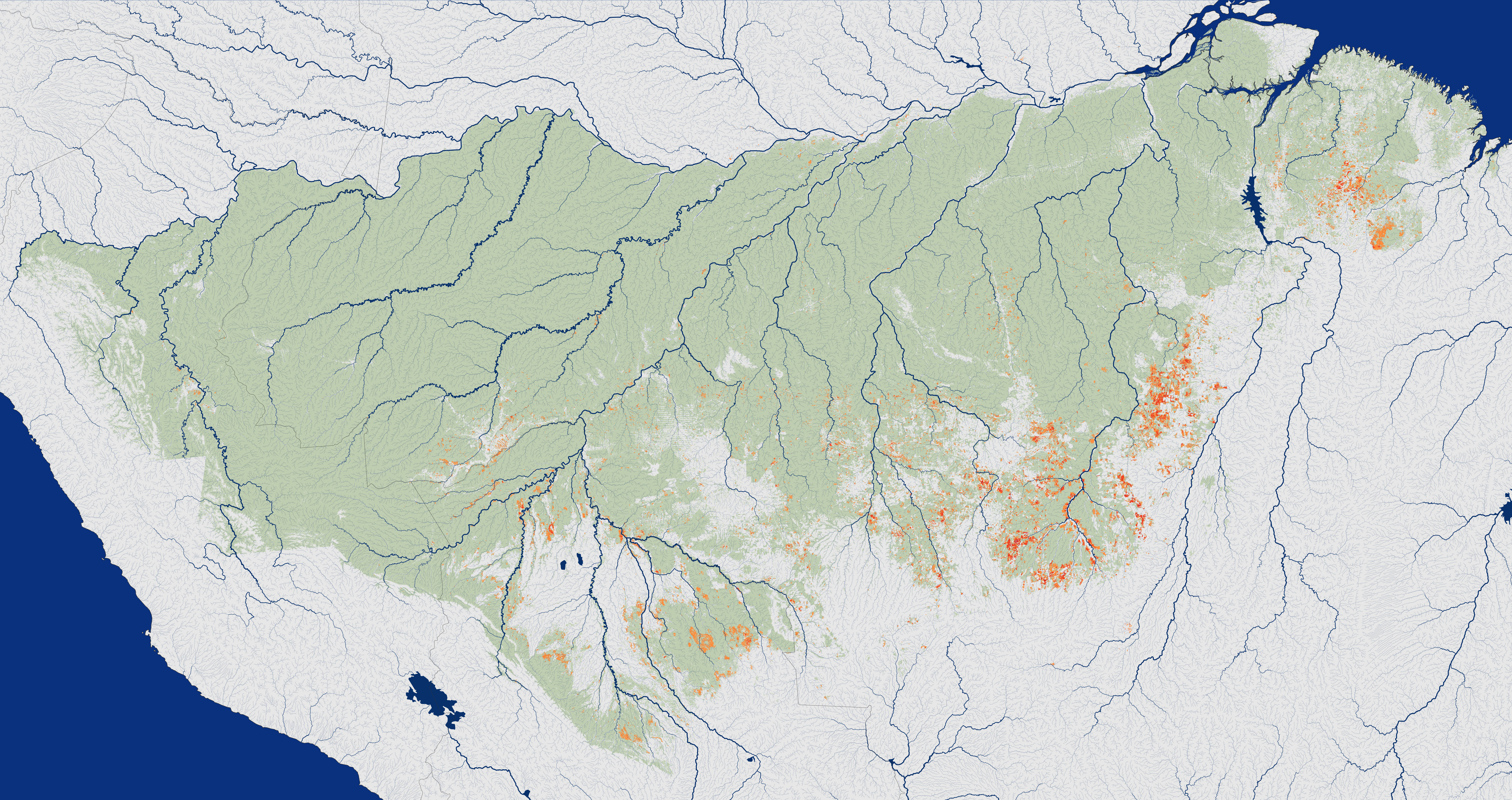
Fire in the Xingu River Basin
Color bar for Fire in the Xingu River Basin
acquired 1999 - 2010 download large image (6 MB, JPEG, 7816x4137)
When most people think of the Amazon rainforest, they envision a vast expanse of green jungle, dripping with moisture year round. Some parts of the Amazon do receive relentless rain, but other regions have a distinct dry season when little or no rain falls.
The southeastern Amazon, in the Brazilian states of Mato Grosso and Pará, has a four-to-five month dry season that limits rains to a trickle. Lush vegetation survives by sending roots up to 10 meters (30 feet) into the ground. Ecologists worry that as climate change brings hotter, drier conditions to the region, the southern edge of the Amazon could easily transition from forest to tropical savanna known in South America as the Cerrado.
The boundary between rainforest and the Cerrado cuts across the Amazon Basin in a ragged line that runs through the Brazilian states of Rondônia, Mato Grosso, and Pará. The boundary has emerged as one of the most interesting parts of the Amazon to study because it is at this forest frontier where the needs of modern Brazilian society—cleared land for farmers, ranchers, villages, and roads—come into direct conflict with those of the rainforest and the large populations of indigenous peoples who live within the forest.
Then there are the fires. Satellite and ground observations of the forest edge show evidence of what ecologists call “understory” fires—low-intensity blazes that creep along the leaf littler on the forest floor but never get hot enough to burn up through the canopy. Since the fires remain beneath the canopy, NASA satellites designed to monitor fire activity rarely detect understory fires (unlike those that release more energy, such as deforestation or agricultural management fires). But satellites can sense the subtle changes in the forest canopy in the wake of these understory fires, as the damaged vegetation slowly dies and new trees grow back.
Distinguishing between understory fire damage and other types of forest disturbance—such as selective logging and deforestation for agriculture—is not straightforward with satellite imagery, explained NASA scientist Doug Morton. In the last few years, Morton has worked out a new technique based on data from the Moderate Resolution Imaging Spectroradiometer (MODIS) sensor that makes it easier to distinguish understory fires from similar-looking forest disturbances.
The technique has made it possible for Morton and his colleagues to map the distribution of understory fires across the entire southern Amazon basin for the first time. (See the large image for the distribution of understory fires across the basin). Morton found that understory forest fires burned more than 85,500 square kilometers (33,000 square miles), or 2.8 percent of the forest, between 1999 and 2010.
The prevailing theory has been that deforestation and understory fires go hand in hand, because deforestation creates gaps in the rainforest canopy that dry out the forest floor. Surprisingly, Morton’s mapping found no correlation between understory fires and deforestation. In fact, even in areas with little or no deforestation—such as the large reserves in the Xingu River Basin set aside for Brazil’s indigenous people—the analysis detected very large understory fires, with some areas burning frequently.
The Xingu River Basin saw more forests with repeated burning than nearly anywhere else in the Amazon over the study period, with some areas facing four or more fires. As shown in the map above, the fires within the indigenous reserve were concentrated along the banks of the Xingu River; rivers are the main transportation network for indigenous groups in the Xingu basin, similar to other remote regions of the Amazon where roads are scarce or seasonally flooded. Amongst the farms and ranches on the forest frontier beyond the reserve, fires were also common but scattered more broadly.
“One of the things this research shows is that deforestation probably isn’t the key driver of understory fires we once thought it was,” said Morton. “The simple presence of people—indigenous or otherwise—along with hot, dry weather is all you need for large understory fires to burn along the southern edge of the Amazon.”
Morton’s next question: “Are the forests along the edges of the Amazon able to withstand all these understory fires or will we see a gradual transition from forest to savanna over time?”
NASA Earth Observatory images by Jesse Allen, using data provided by Douglas Morton (NASA/GSFC). Caption by Adam Voiland.
Instrument: 
Terra - MODIS


NASA: Brazil - Amazon - Fire in the Xingu River Basin - 25.06.13


Ricardo M Marcenaro - Facebook


Blogs in operation of The Solitary Dog:

Solitary Dog Sculptor:

 byricardomarcenaro.blogspot.com
Solitary Dog Sculptor I:
 
byricardomarcenaroi.blogspot.com/

Para:
comunicarse conmigo
marcenaroescultor@gmail.com

For:
contact me
marcenaroescultor@gmail.com

My blogs are an open house to all cultures, religions and countries. Be a follower if you like it, with this action you are building a new culture of tolerance, open mind and heart for peace, love and human respect. Thanks :)


Mis blogs son una casa abierta a todas las culturas, religiones y países. Se un seguidor si quieres, con esta acción usted está construyendo una nueva cultura de la tolerancia, la mente y el corazón abiertos para la paz, el amor y el respeto humano. Gracias:)


(::)